FHA vs conventional: which loan actually fits you?
FHA vs conventional mortgages compared: down payment, credit scores, mortgage insurance, and loan limits. A clear breakdown sourced from HUD, Fannie Mae, and Freddie Mac.
They're the two most common ways to buy a home — but they play by different rules on down payment, credit, and mortgage insurance. Here's the honest side-by-side, so you can pick with your eyes open.
Almost every buyer lands on one of two paths: an FHA loan, insured by the government through the Federal Housing Administration, or a conventional loan, which follows the guidelines set by Fannie Mae and Freddie Mac. Neither is "better" — they're built for different situations. The trick is knowing which one your numbers point to.
The short version
| FHA loan | Conventional loan | |
|---|---|---|
| Minimum down | 3.5% (580+ score) | 3% first-time / 5% standard |
| Credit floor | 500–580 | Typically 620+ |
| Mortgage insurance | MIP — often for the life of the loan | PMI — drops off at 20–22% equity |
| Upfront insurance | Yes (1.75% upfront MIP) | None |
| Best for | Lower credit, thinner savings | Stronger credit, avoiding long-term insurance |
Down payment
FHA's headline number is 3.5% down if your credit score is 580 or higher (and as low as 500 with 10% down). Conventional actually goes lower for many buyers: Fannie Mae's HomeReady® and the Conventional 97 program allow 3% down for a first-time buyer's primary residence, with 5% the standard minimum otherwise.
So the old idea that "FHA is the low-down-payment loan" isn't quite true anymore — conventional can start lower. The bigger difference is what happens after you put that money down.
Credit scores
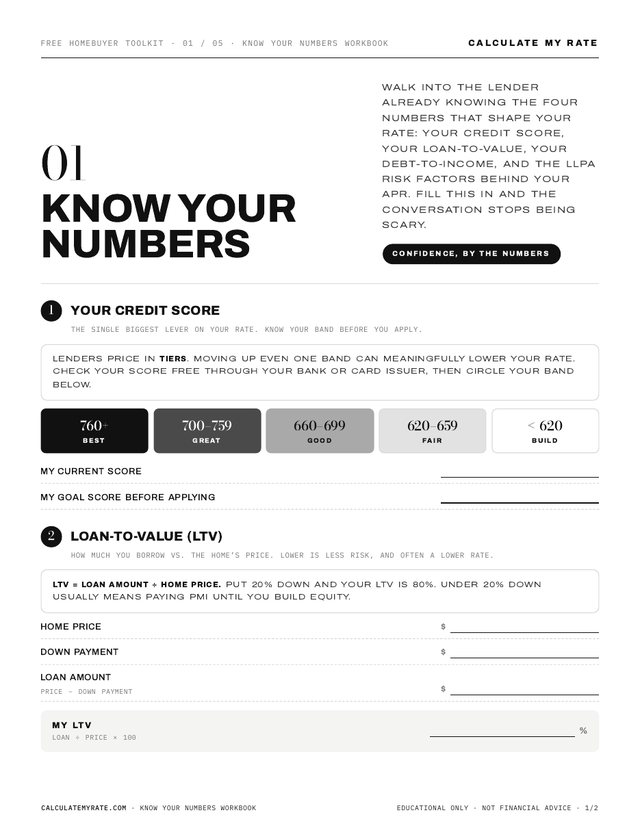
This is where FHA earns its reputation. FHA will work with scores down to 580 (and even 500 with more down), making it a genuine on-ramp for buyers who are still building credit. Conventional loans generally want 620 or higher, and your rate improves as your score climbs. If your credit is thin or bruised, FHA is often the door that opens first.
Mortgage insurance — the part that costs you long-term
Both loans charge insurance when you put down less than 20%, but they behave completely differently:
On a conventional loan, PMI cancels — you can request removal at 20% equity, and it's legally automatic at 22%. On an FHA loan, MIP typically lasts the life of the loan when you put down less than 10%, plus there's a 1.75% upfront premium at closing. That long tail is the single most overlooked cost difference between the two.
Loan limits
Both are "conforming" loans with caps set each year. For 2025, the baseline conventional limit for a single-family home is $806,500, rising to $1,209,750 in high-cost areas. FHA sets its own floor and ceiling by county. If you're shopping above these limits, you're into jumbo territory — a different conversation entirely.
So which one?
If your credit is still climbing or your savings are tight, FHA is often the way in. If you've got a 620+ score and want to avoid paying insurance for decades, conventional usually wins on total cost — especially since you can put as little as 3% down as a first-time buyer. The smartest move is to price out both, insurance included, before you commit.
Sources: U.S. Department of Housing and Urban Development (HUD) / FHA down payment & mortgage insurance premium guidelines; Fannie Mae Selling Guide (HomeReady® and standard down payment / credit requirements); Freddie Mac conventional loan guidelines; Federal Housing Finance Agency (FHFA) 2025 conforming loan limits; Consumer Financial Protection Bureau (CFPB) mortgage insurance guidance.
Move your credit score and down payment and watch your rate update.